


Booster club fundraising works best when you stop chasing volume and start chasing margin. A car wash might bring in $800 on a Saturday and cost you 40 volunteer hours. An apparel storefront can bring in the same amount while you sleep. The honest answer to "how to raise money for a booster club" is this: pick two or three fundraisers with real profit percentages, run them on a calendar, and kill everything that burns out your parents.
TL;DR: The best fundraisers for booster clubs have high margins, low volunteer hours, and something parents actually want to buy. Custom player gear beats generic school merch every time, because families buy the kid, not the logo.
What a booster club actually is, and what the IRS expects
A booster club is an independent parent-run group that raises money to support a specific school program. Uniforms, travel, tournament fees, equipment repairs, senior night, the stuff the athletic budget never quite covers.
Here's the part people skip. Your booster club is legally separate from the school district. That means the money you raise is your organization's money, and you are on the hook for how it's handled.
Most established clubs file for 501(c)(3) status. According to the IRS, a qualifying organization must be organized and operated exclusively for exempt purposes, and none of its earnings may go to private individuals. That last clause is the one that trips up athletic booster clubs.
Translation: you cannot run individual "player accounts" where a family's fundraising effort reduces only their own kid's fees. The IRS has flagged this practice repeatedly. Money raised has to benefit the group.
You can still sell gear personalized to one athlete. That is a retail transaction, not a private benefit. The revenue goes to the club and supports the whole program. Big difference, and it matters.
A few housekeeping items worth doing before your next season:
- Written bylaws covering officer terms, voting, and how funds get approved
- Two signatures required on any check over a set amount
- A treasurer's report at every meeting, in writing
- An annual IRS filing (Form 990-N, 990-EZ, or 990 depending on your gross receipts)
If your club is brand new and gross receipts are under $5,000, you may operate without formal exemption while you get organized. Talk to an accountant. Do not guess on this.
The fundraiser types ranked by what you actually keep
Nobody publishes clean ROI data on booster club fundraisers, so here's the practical framework we use after years of working with programs: judge every idea on margin, volunteer hours, and repeatability.
High margin, low labor (do these first)
- Apparel and spirit wear storefronts. Online, no inventory risk, runs all season. This is the workhorse.
- Local business sponsorships. A $500 banner on the outfield fence is nearly 100% profit after the banner cost.
- Program ads. Sell a quarter page in the game program to the pizza place down the street.
- Direct ask campaigns. Awkward, but the margin is total. One well written letter to alumni beats three car washes.
Medium margin, medium labor
- Concession stands (good money, brutal volunteer schedule)
- Restaurant nights (typically 10 to 20% of sales, easy to organize)
- Tournaments and camps (real profit, real liability paperwork)
- Silent auctions at a banquet you're already hosting
Low margin or high burnout (be selective)
- Catalog sales, cookie dough, wrapping paper. The club often keeps well under half.
- Raffles, which are gambling in most states and require permits. Check your state gaming rules first.
- Car washes and bake sales. Fine for a freshman team building activity. Not a funding plan.
The pattern is obvious once you see it. The fundraisers that scale are the ones that don't need a volunteer standing behind a table.
For band booster club fundraising ideas specifically, the same math holds: instrument repair funds and competition travel get funded fastest through sponsorships, ad sales, and concessions, because those don't compete with the rehearsal schedule.
Why custom player gear outsells generic school merch
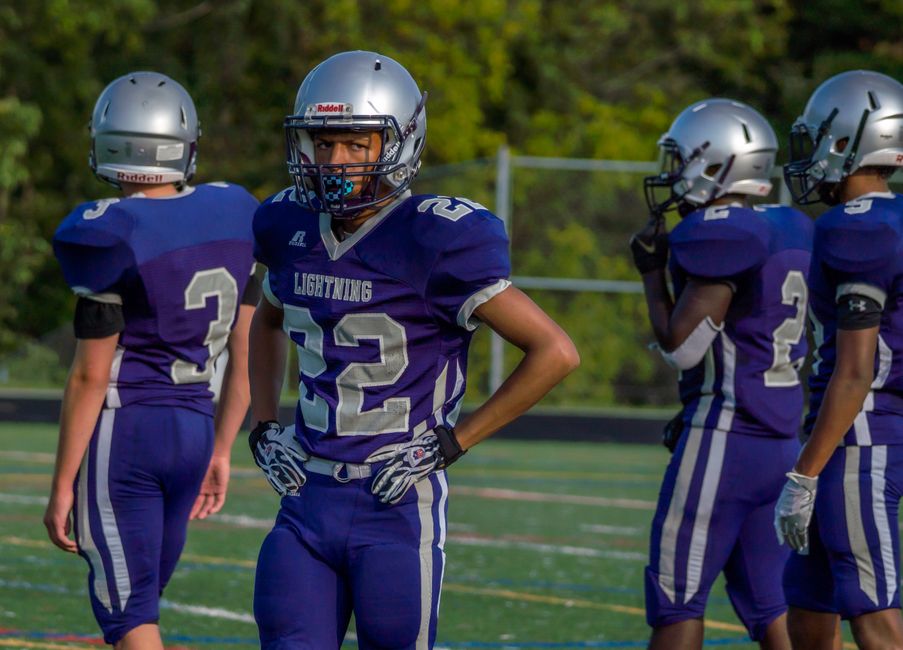
Here's the thing about the standard booster club apparel fundraiser. You order 150 hoodies with the school mascot on the front. You sell 62. The rest live in a garage until someone donates them.
The problem isn't the hoodie. The problem is that grandparents don't want a school hoodie. They want the one with their grandson's name and number on it.
That's the whole insight behind Clutch Fundraising. We build a storefront for your program where family and friends order gear personalized to a specific athlete. A replica jersey with the player's name and number. A team hat with their number on the side. The stuff people actually keep.
Then the economics get simple:
- Your program earns 30% of all custom merchandise sales as a direct donation
- Payouts are automatic and monthly. You don't chase anyone for a check
- No upfront cost, no setup fees, no bulk inventory ordering. Nothing to store, nothing to eat if it doesn't sell
- Sales tracking is transparent, so your treasurer can report real numbers at the meeting instead of estimates
Run the math on a 40 player roster. If each athlete's extended family buys an average of $75 in gear across a season, that's $3,000 in sales and $900 back to the club. No volunteer hours. No garage full of unsold size XL.
We've worked with over 1,500 athletes since 2022, and the pattern is consistent: personalized items convert at a rate generic merch never touches. Jerseys and name-and-number hats are the two things families reliably come back for.
Honest caveat: this is not a magic money machine. If your parent group won't share the storefront link, nothing sells. The clubs that do well post it in the team group chat, put a QR code on the concession stand sign, and mention it at the parent meeting. Ten minutes of promotion, then it runs itself.
Also worth saying plainly: we serve sports programs. If you're raising money for a non-athletic school group, this specific fundraiser isn't your fit, and the sponsorship and ad-sale playbook above will serve you better.
Build a fundraising calendar, not a fundraising panic
The clubs that struggle run one big event in October and hope. The clubs that fund a full season stack revenue across the year.
A workable athletic booster club fundraising calendar looks like this:
- Preseason (6 weeks out): launch the apparel storefront alongside uniform handout, when excitement is highest
- Preseason: close sponsorship and program ad sales before the first home game
- In season: concessions every home game, one restaurant night per month
- Midseason: re-share the storefront link when new fans are showing up
- Postseason: banquet with a silent auction, plus an alumni ask letter
The National Federation of State High School Associations reports that roughly 8 million students participate in high school sports each year, according to its annual participation survey. Every one of those athletes has a family that wants to show up wearing something. That's your market, and it's already sitting in the bleachers.
For more on the fan side of this, see our breakdown of what parents actually buy in team fan gear and how personalized merchandise builds a program's culture.

Frequently Asked Questions
What is the most profitable booster club fundraiser? Sponsorships and online apparel sales, because both have high margins and low labor. A $500 sponsor banner costs you the price of the banner. An online storefront costs you nothing upfront and returns 30% of sales with Clutch Fundraising. Compare that to catalog sales, where clubs often keep less than half.
How do booster clubs raise money? Through a mix of merchandise and spirit wear sales, local business sponsorships, concessions, program ads, restaurant nights, tournaments, and direct donation campaigns. Strong clubs run three or four of these on a set calendar instead of one big annual event.
Do booster clubs need to be a 501(c)(3) to fundraise? No, but you should get it. Without exempt status, donations aren't tax deductible for donors and your revenue may be taxable. The IRS requires exempt organizations to operate for the group's benefit, not individual members, so avoid per-family credit accounts.
Are apparel and spirit wear sales good booster club fundraisers? Yes, if you skip the bulk order. Prepaid online storefronts remove inventory risk entirely. Personalized gear with a player's name and number sells considerably better than generic school merch, because families are buying their kid, not the logo.
Ready to see the numbers for your own roster? Make a free account at clutchicons.com/fundraising. No commitment, no setup fee, and you can look at the whole thing before you show it to a single parent.
Share: